Are ants invading your beloved potted plants? You’re not alone—and the good news is, you can take control without harming your greenery.
Ants don’t just annoy you; they can disrupt your plant’s health by nesting in the soil or protecting other pests like aphids. If you want to enjoy vibrant, pest-free plants, it’s crucial to act fast and smart. In this guide, you’ll discover simple, effective ways to get rid of ants in your pots using safe methods that protect your plants and your home.
Keep reading to learn how to reclaim your plants and say goodbye to those pesky ants for good!
:max_bytes(150000):strip_icc()/GettyImages-1264685169-22bc5ed6fe504577802bd8d45e50a968.jpg)
Credit: www.southernliving.com
Why Ants Invade Potted Plants
Ants often invade potted plants for specific reasons tied to their survival and food sources. Understanding why ants enter these plants helps to prevent and control infestations effectively. Ants seek shelter, food, and a safe place to build their nests. Potted plants often provide the perfect environment for these needs.
Nesting Habits In Soil
Ants like loose, dry soil in pots. This soil is easy to dig and create tunnels. Potted plants offer a warm, protected area away from predators. The soil stays moist enough to support their colony but not too wet to cause problems. Inside the soil, ants build nests with chambers for eggs and larvae. This safe habitat helps the colony grow and thrive.
Attraction To Aphids And Honeydew
Aphids often live on potted plants, feeding on plant sap. These small insects produce a sweet liquid called honeydew. Ants are drawn to this sugary substance as a food source. They protect aphids from predators to keep the honeydew flowing. This relationship encourages ants to stay on the plant and nearby soil. The presence of aphids often means ants will invade the pot.
Signs Of Ant Infestation
Ants in potted plants can cause problems if not noticed early. Detecting signs of an ant infestation helps stop damage and protect your plants. Watch carefully for clues that ants are present and active.
Visible Ant Trails
Ant trails look like thin lines of moving ants on soil or pots. These trails show the path ants take to gather food or build nests. You might see ants climbing the plant stems or pot edges. The trails often lead to small holes or cracks in the soil surface. Spotting these trails is an easy way to confirm ants live in your plant.
Damaged Plant Or Soil Disturbance
Ants dig tunnels that disturb the soil around the plant roots. The soil may look uneven or have small mounds near the pot edges. You might notice tiny holes on the soil surface where ants enter and exit. Some ants farm aphids, which can harm plants by sucking sap. Watch for wilting leaves or yellow spots, signs of aphid damage linked to ants. Soil disturbance and plant damage together suggest an ant problem.
Natural Remedies To Deter Ants
Natural remedies offer safe ways to keep ants away from potted plants. These methods use simple ingredients that do not harm plants or pets. They work by repelling ants or disrupting their movement. Using natural options helps maintain a healthy environment for your plants.
Using Cinnamon As A Repellent
Cinnamon has a strong smell that ants dislike. Sprinkle ground cinnamon on the soil surface and around the pot. This creates a barrier ants avoid crossing. Reapply cinnamon after watering to keep ants at bay. It also adds a mild scent that freshens the plant area.
Applying Diatomaceous Earth
Diatomaceous earth is a natural powder made from fossilized algae. Sprinkle food-grade diatomaceous earth lightly on the soil top and near the pot edges. It works by damaging ants’ exoskeletons, causing them to dry out. Reapply after watering or rain to maintain its effect. This remedy is safe for plants and pets.
Neem Oil Treatments
Neem oil comes from neem tree seeds and acts as a natural insect repellent. Mix neem oil with water and spray it on the soil and plant leaves. Neem oil disrupts ants’ growth and deters aphids, which attract ants. Repeat treatments weekly until ants disappear. This method controls pests without chemicals.
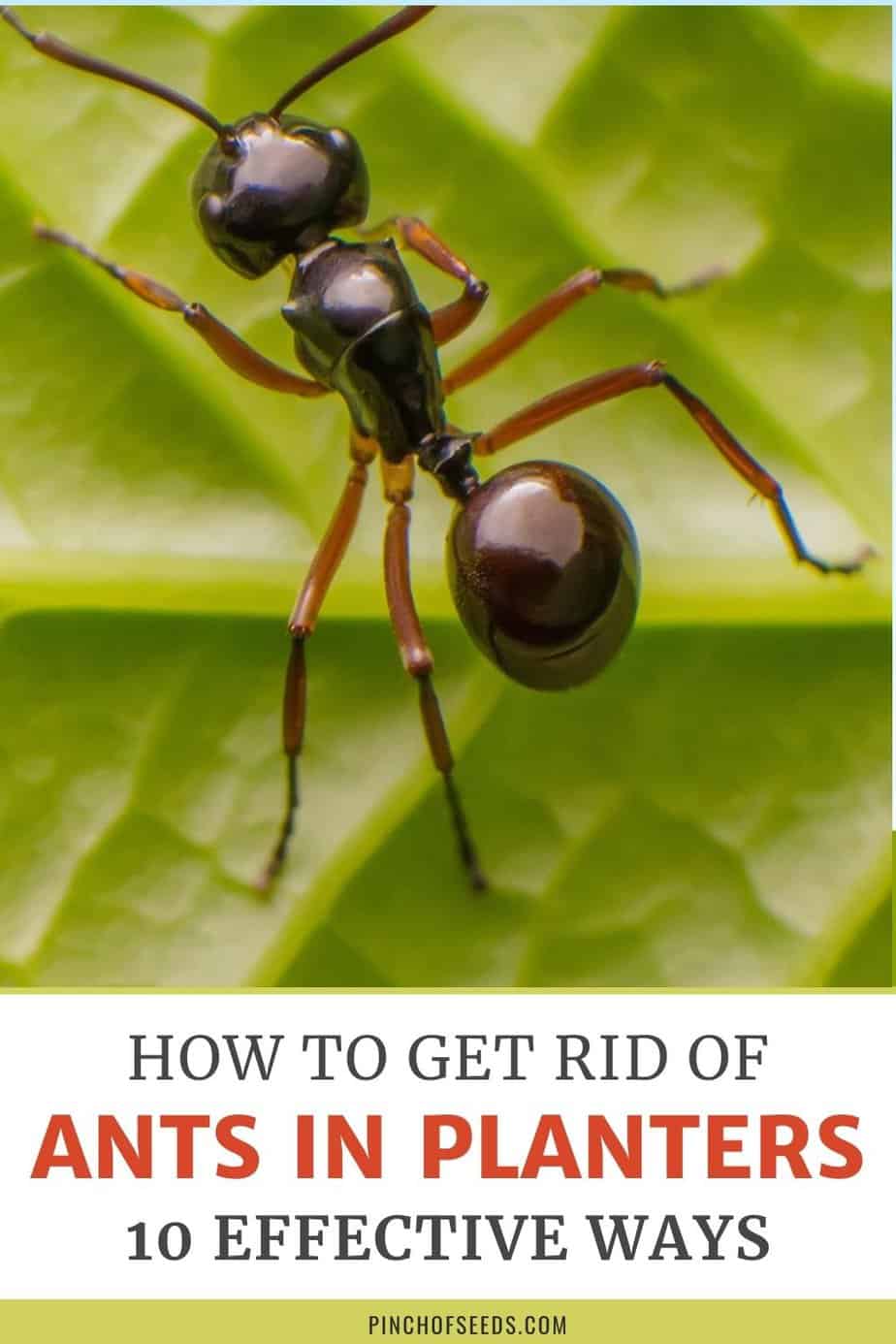
Credit: pinchofseeds.com
Ant Baits And Traps
Ant baits and traps offer an effective way to control ants in potted plants. These tools attract ants to consume a poison that they carry back to their colony. This method targets the entire colony, not just the ants visible on your plants.
Using baits and traps reduces the need for harsh chemicals near your plants. It also minimizes disturbance to the soil and roots. Below are different options and important tips for using ant baits and traps safely.
Homemade Borax And Sugar Baits
Homemade baits are simple and budget-friendly. Mix one part borax with three parts sugar to make a paste. The sugar attracts ants, while borax acts as a slow poison.
Place small drops of this mixture near the plant pot, but not directly on the soil. Ants will carry the bait back to their nest, helping to reduce the population.
Keep the bait out of reach from pets and children. Replace it every few days until ants disappear.
Commercial Ant Bait Options
Store-bought ant baits come in ready-to-use forms. They often contain ingredients like hydramethylnon or fipronil. These poisons work slowly to kill the entire colony.
Choose baits labeled safe for use near plants. Follow the package instructions carefully. Many commercial options include stations that keep the poison contained.
These bait stations help prevent accidental contact with pets or kids while still attracting ants.
Placement And Safety Tips
Place baits near the base of the plant pot or along ant trails. Avoid putting bait directly on the soil or on plant leaves. This protects your plants from damage.
Keep bait away from pets and children at all times. Use gloves when handling poisons and wash hands after.
Remove any leftover bait once ants are gone. Monitor your plants regularly to catch new ant activity early.
Physical Methods To Remove Ants
Physical methods provide a straightforward way to remove ants from potted plants. These techniques avoid chemicals and focus on immediate removal. They work well for small infestations and help protect your plants.
Flushing Ants With Water
Pour water directly onto the soil surface to flush out ants. Use a gentle stream to avoid damaging the plant roots. This method forces ants to leave their nests in the soil. Repeat the process until you see fewer ants around the plant.
Repotting With Fresh Soil
Remove the plant carefully from its pot. Shake off old soil and inspect the roots for ant nests. Clean the pot thoroughly or use a new one. Add fresh, sterile potting soil before placing the plant back. Repotting disrupts ant colonies and removes their food source.
Cleaning Pot And Surrounding Area
Wipe down the pot’s exterior with a damp cloth to remove ants and residue. Sweep or vacuum the area around the pot to clear away food crumbs and debris. Ants are attracted to leftover food, so keeping the area clean helps prevent re-infestation.
Preventing Future Ant Problems
Stopping ants from coming back to your potted plants needs regular care. Ants enter pots for food or shelter. They like the sweet honeydew made by aphids. Preventing ants means removing their food and making plants less inviting. Simple steps can keep your plants safe and ant-free for a long time.
Maintaining Plant Health
Strong plants are less likely to attract ants. Healthy plants resist pests and diseases well. Water plants correctly and avoid overwatering. Use fresh soil and good drainage in pots. Trim dead leaves and remove fallen debris. Keep plants in bright, clean spaces. This limits ant hiding spots and food sources.
Removing Aphid Infestations
Aphids produce honeydew, which ants love. Watch plants closely for aphids on leaves and stems. Spray plants gently with water to knock aphids off. Use insecticidal soap or neem oil to control aphids. Removing aphids cuts off ants’ food supply. This helps reduce ant visits and stops their nests.
Using Barriers Around Pots
Physical barriers block ants from reaching your plants. Wrap sticky tape around pot rims to trap ants climbing up. Use diatomaceous earth on soil surface; it dehydrates ants. Place pots on stands with water trays to stop ants walking up. Barriers work best combined with healthy plant care and aphid control.
Safe Pest Control Products
Choosing safe pest control products is essential to protect your plants and home. These products target ants without harming your potted plants. They help keep your garden healthy and pest-free. Below are some effective and gentle options for ant control.
Insecticidal Soaps
Insecticidal soaps kill ants by breaking down their outer shells. They are made from natural fatty acids and water. These soaps are safe for most plants and degrade quickly. Spray the soap directly on ants and affected soil areas. Repeat treatment as needed to control infestations.
Plant-safe Ant Killers
Plant-safe ant killers use natural ingredients to target ants without toxic chemicals. Products with neem oil or essential oils disrupt ant behavior and repel them. These killers can be sprayed or dripped onto soil or leaves. They protect beneficial insects and prevent damage to your plants.
Avoiding Harmful Chemicals
Harsh chemicals can harm your plants and soil life. Avoid products with synthetic pesticides or strong poisons. These can stunt plant growth or kill helpful insects like pollinators. Choose organic or natural pest control options. Always read labels to ensure safety for indoor or outdoor plants.

Credit: www.wikihow.com
Frequently Asked Questions
How Do You Kill Ants Without Harming Plants?
Use food-grade diatomaceous earth on soil to dehydrate ants safely. Apply cinnamon to repel ants naturally. Place borax-sugar bait near plants to kill colonies without harming greenery. Treat aphids to remove ant food sources. Repot plants if infestation persists.
Why Do Ants Go Into Potted Plants?
Ants enter potted plants to build nests in loose soil and collect honeydew from aphids or sap-sucking insects nearby.
What Is The Best Ant Killer For Plant Pots?
The best ant killer for plant pots is food-grade diatomaceous earth and neem oil. Use ant baits to eliminate colonies safely. Sprinkle cinnamon or insecticidal soap to repel ants without harming plants. Repot if infestation is severe. Treat aphids to prevent ant attraction.
What To Do If A Plant Is Infested With Ants?
Sprinkle food-grade diatomaceous earth on soil to kill ants. Use ant baits near the plant base. Repot if infestation persists. Treat aphids to remove food sources. Clean the pot area to disrupt ant trails.
Conclusion
Ants can harm your potted plants if left unchecked. Use simple methods like cinnamon or diatomaceous earth to keep them away. Regularly check your plants for signs of ants or aphids. Repot plants when infestations become severe to protect roots.
Clean pots and fresh soil reduce ant-friendly environments. These easy steps help maintain healthy, ant-free plants at home. Keep your plants thriving and pest-free with consistent care.