Growing your own fresh cucumbers right on your patio or balcony is easier than you might think. If you’ve ever wondered how to grow cucumber plants in pots, this guide is for you.
You don’t need a big garden to enjoy crisp, homegrown cucumbers—just the right pot, soil, and care. Imagine picking juicy cucumbers straight from your container, perfect for salads or snacks. Keep reading, and you’ll discover simple steps and smart tips to help your cucumber plants thrive in pots, even if you’re new to gardening.
Your tasty, homegrown harvest is just a few easy moves away!
:max_bytes(150000):strip_icc()/southernliving-cucumberinpots-AmazingNaturePhotography-1890ea24e1604df69e53ea2f8e65eee8.jpg)
Credit: www.southernliving.com
Choosing The Right Container
Choosing the right container is crucial for growing healthy cucumber plants in pots. The container size, material, and drainage affect how well your cucumbers grow. A proper pot ensures enough space for roots and prevents water problems. This guide helps you select the best pot for your cucumber plants.
Ideal Pot Size
Select a pot at least 12 inches deep and 12 inches wide. Bigger containers hold more soil and water. They give cucumber roots room to spread. Small pots dry out quickly and limit growth. A larger pot helps plants produce more cucumbers.
Drainage Importance
Cucumbers need well-drained soil to avoid root rot. Choose pots with drainage holes at the bottom. Good drainage stops water from pooling around roots. Add a layer of small rocks or gravel for better flow. Without drainage, roots can stay too wet and damage the plant.
Material Options
Common pot materials include plastic, clay, and fabric. Plastic pots are lightweight and hold moisture well. Clay pots breathe better but dry out faster. Fabric pots improve air circulation and root health. Pick a material that suits your watering habits and climate.
Selecting Cucumber Varieties
Selecting the right cucumber variety is key for growing success in pots. Different types have unique growth habits and space needs. Choosing a suitable variety helps plants thrive in limited space. It also affects the yield and ease of care. Here are some common cucumber types ideal for container gardening.
Bush Types For Pots
Bush cucumbers grow compact and upright. They suit small pots well. These plants do not need much support or training. Varieties like ‘Bush Slicer’ and ‘Spacemaster’ are popular choices. They produce good fruit quantities in tight spaces. Their shorter vines reduce the risk of damage in containers. Bush types are easier to manage for beginners.
Vining Varieties
Vining cucumbers have long, trailing stems. They require larger pots and vertical support. Trellises or cages help save space and improve air flow. These varieties often yield more fruit than bush types. ‘Marketmore’ and ‘Straight Eight’ are common vining cucumbers. Growers must prune and train vines carefully. These plants thrive if given room to climb.
Disease-resistant Options
Disease resistance is important in container growing. Pots can create humid conditions that spread fungi and mildew. Choose varieties labeled resistant to powdery mildew and other diseases. ‘Sweet Success’ and ‘County Fair’ resist common cucumber illnesses. Disease-resistant types reduce the need for sprays. They ensure healthier plants and better harvests.
Preparing Potting Mix
Preparing the right potting mix is key to growing healthy cucumber plants in pots. Cucumbers need soil that drains well but holds enough moisture. The potting mix should also provide nutrients for steady growth. Good preparation helps plants grow strong roots and produce crisp cucumbers.
Lightweight Soil Mix
Choose a lightweight soil mix for your cucumber pots. This type of soil drains water quickly and prevents root rot. It also allows air to reach the roots easily. A mix of peat moss, perlite, and vermiculite works well. Avoid heavy garden soil that can become compacted in pots.
Adding Compost
Mix compost into your potting soil to add nutrients. Compost improves soil texture and helps retain moisture. It feeds cucumber plants with organic matter for better growth. Use well-rotted compost to avoid burning the roots. Stir the compost evenly through the soil before planting.
Using Slow-release Fertilizer
Incorporate a slow-release fertilizer into the potting mix. This type of fertilizer feeds plants gradually over weeks. It reduces the need for frequent feeding and supports steady growth. Choose a balanced fertilizer with nitrogen, phosphorus, and potassium. Mix it well into the soil for even nutrient distribution.
Planting Seeds And Seedlings
Planting seeds and seedlings is the first step to growing cucumbers in pots. Choosing the right time and spacing helps plants grow strong. Starting indoors or outdoors affects how quickly your cucumbers will develop. This section guides you through these important planting details.
When To Plant
Plant cucumber seeds after the last frost date in your area. The soil should be warm, at least 70°F (21°C). In Austin, Texas, this usually means planting in late March or early April. Warm soil helps seeds sprout faster and seedlings grow better.
Seed Spacing Tips
Space seeds or seedlings about 12 inches apart in the pot. This gives each plant room to grow and spread. Overcrowding can cause weak plants and reduce cucumber production. Use a pot that is at least 12 inches wide for each plant to ensure good spacing.
Starting Indoors Vs Outdoors
Starting seeds indoors helps you control temperature and soil conditions. Sow seeds in small pots or seed trays about 3 to 4 weeks before outdoor planting. Transplant seedlings outside when they have two to three true leaves. Direct sowing outdoors saves time but needs warm soil. Choose the method that fits your schedule and climate best.
Watering And Moisture Control
Watering and moisture control are crucial for growing healthy cucumber plants in pots. Cucumbers need a steady supply of water to thrive. Pots dry out faster than garden soil, so careful attention is required.
Keeping the soil moist but not soggy helps cucumbers grow strong roots. Uneven watering can cause bitter fruit and poor growth. Understanding how to manage moisture in pots improves plant health and yield.
Consistent Moisture Needs
Cucumbers prefer soil that stays evenly moist. Water the plants whenever the top inch of soil feels dry. During hot weather, check the soil daily. Avoid letting the soil dry out completely. Dry soil stresses the plant and reduces fruit quality.
Use a watering can or drip irrigation to provide gentle, thorough watering. Water deeply to encourage roots to grow downward. Consistent moisture prevents bitter cucumbers and promotes steady growth.
Signs Of Overwatering
Too much water can harm cucumber plants. Overwatering causes yellow leaves and wilting. The soil may smell sour or look muddy. Roots can rot in waterlogged soil, damaging the plant.
Check drainage holes in the pot to avoid water buildup. If leaves turn yellow and the plant droops, reduce watering. Let the soil dry slightly between waterings to keep roots healthy.
Using Self-watering Pots
Self-watering pots simplify moisture control for cucumbers. These pots have a reservoir that supplies water to the plant roots as needed. They keep the soil moist without overwatering.
Self-watering pots reduce watering frequency and help maintain consistent soil moisture. They are ideal for busy gardeners or hot climates. Choose pots with good size and quality for best results.
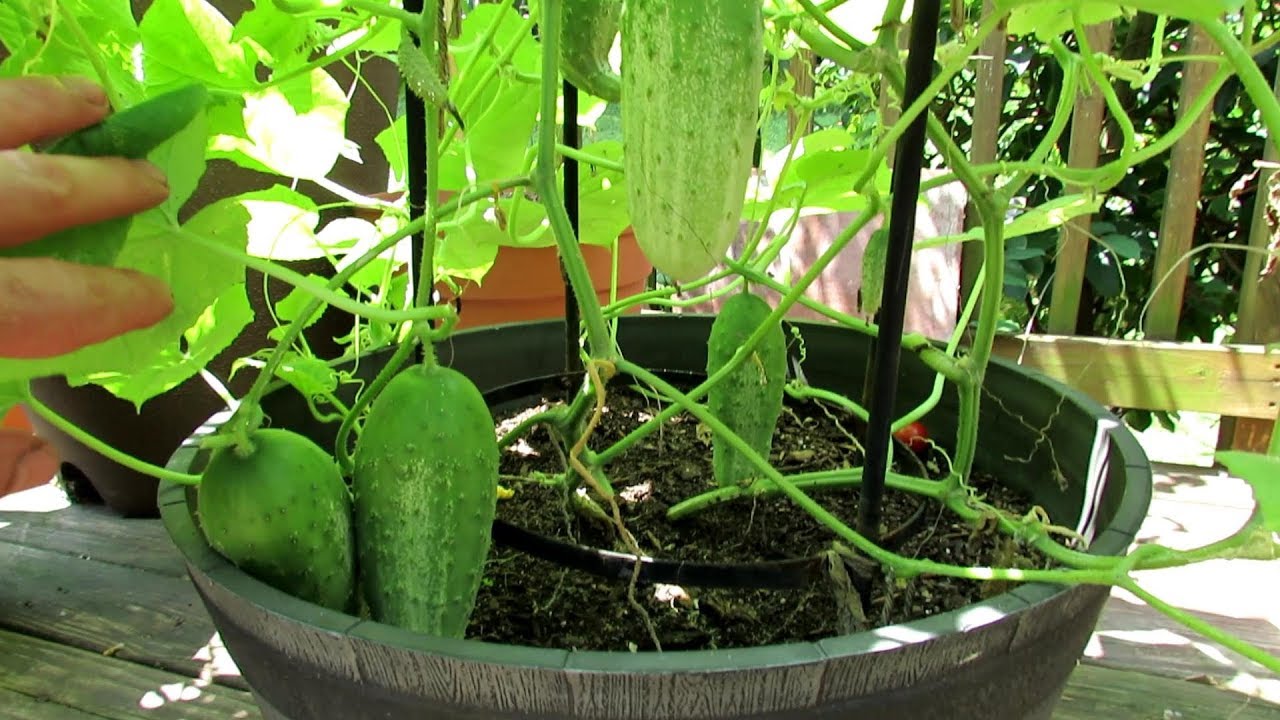
Credit: www.youtube.com
Supporting Cucumber Growth
Supporting cucumber growth in pots is key to healthy plants and good harvests. Cucumbers are vines that need help to grow upward. Proper support keeps fruits clean and saves space. It also improves air circulation and sunlight exposure. This lowers the risk of diseases and makes picking easier.
Installing Trellises
Trellises provide a vertical structure for cucumber vines. Use wood, metal, or plastic trellises that fit the pot size. Place the trellis firmly in the soil near the plant. As vines grow, gently tie them to the trellis with soft ties. This guides the plant upward and prevents breakage. Trellises also save space on small patios or balconies.
Stakes And Cages
Stakes are simple supports for young cucumber plants. Insert a stake into the pot next to the plant. Tie the main stem loosely to the stake as it grows. Cages work well for bushier cucumber varieties. They surround the plant, giving support from all sides. Both stakes and cages keep vines from sprawling on the ground. This protects the fruit from pests and dirt.
Training Vines Vertically
Training vines to grow straight up helps plants use space well. Start by directing the main vine to climb the support structure. Tie the vine gently every few inches to keep it steady. Pinch off side shoots that grow too long to focus energy on main fruits. Regularly check the ties to avoid cutting into the stems. Vertical training leads to stronger plants and larger cucumbers.
Feeding And Fertilizing
Feeding and fertilizing cucumber plants in pots is key for healthy growth and good yield. Potted plants have limited soil, so nutrients can run out fast. Regular feeding keeps plants strong and supports fruit development. Use the right type and amount of fertilizer to avoid nutrient deficiencies or damage.
Nutrient Requirements
Cucumbers need nitrogen, phosphorus, and potassium in balanced amounts. Nitrogen helps leaves grow green and lush. Phosphorus supports root and flower development. Potassium improves fruit size and taste. Plants also benefit from calcium and magnesium for strong cell walls. Use a complete fertilizer made for vegetables to cover these needs.
Coffee Grounds As Fertilizer
Used coffee grounds can boost cucumber growth naturally. They add organic matter and release nutrients slowly. Coffee grounds improve soil texture and water retention in pots. They contain nitrogen and trace minerals that cucumbers like. Mix coffee grounds lightly into the topsoil or compost to avoid over-acidity. This eco-friendly option supports plant health and reduces waste.
Avoiding Over-fertilization
Too much fertilizer can harm cucumber plants. Excess nitrogen causes lots of leaves but few fruits. Over-fertilizing leads to burned roots and weak plants. Follow package instructions for dosage and frequency. Use slow-release fertilizers to feed plants evenly. Flush pots with water if salts build up. Healthy feeding means steady growth without stress.
Pest And Disease Management
Managing pests and diseases is crucial for healthy cucumber plants in pots. Small containers limit space, so pests and diseases spread quickly. Vigilance helps catch problems early. Healthy plants resist pests better. Good care includes proper watering, sunlight, and air circulation.
Common Pests
Aphids are tiny insects that suck sap from cucumber leaves. They cause curling and yellowing. Spider mites create fine webs and leave tiny dots on leaves. Whiteflies fly around when disturbed and weaken plants by feeding. Cucumber beetles eat leaves and spread bacterial wilt disease.
Natural Remedies
Spray plants with water to knock off aphids and mites. Use insecticidal soap made from mild soap and water to control pests. Neem oil is a safe, natural pesticide that disrupts insect growth. Introduce beneficial insects like ladybugs to eat harmful pests. Handpick beetles early to reduce damage.
Preventing Fungal Issues
Water cucumber plants at the base to keep leaves dry. Good drainage prevents water from pooling in pots. Space plants to allow air flow and reduce humidity. Remove dead or yellow leaves to stop fungal growth. Use a fungicide if powdery mildew or downy mildew appears.
Harvesting Cucumbers
Harvesting cucumbers at the right time ensures the best taste and texture. Picking them properly also helps the plant produce more fruit. Growing cucumbers in pots gives you easy access to fresh cucumbers right outside your door. Knowing when and how to harvest is key to a successful container garden.
When To Pick
Check cucumbers daily as they grow fast. Pick them when they reach 6 to 8 inches long. The skin should be firm and bright green. Avoid letting cucumbers get too big or yellow. Large cucumbers can taste bitter and have tough seeds. Harvesting early keeps the fruit tender and sweet.
Harvesting Techniques
Use sharp scissors or garden shears to cut cucumbers from the vine. Cut the stem about half an inch above the fruit. Do not pull or twist cucumbers off the vine; this can damage the plant. Handle cucumbers gently to avoid bruising. Clean tools before use to prevent spreading disease.
Encouraging Continuous Production
Pick cucumbers regularly to encourage more flowers and fruit. Remove any old or damaged fruits quickly. Feed the plant with a balanced fertilizer every two weeks. Keep soil moist but not soggy. Provide plenty of sunlight and good air circulation. These steps help your cucumber plant stay healthy and productive.
Troubleshooting Common Problems
Growing cucumbers in pots can be rewarding but sometimes plants face issues. Knowing how to fix common problems helps keep your plants healthy. This section covers typical troubles and easy solutions.
Bitter Or Misshapen Fruits
Bitter cucumbers often mean uneven watering. Water plants deeply and regularly. Avoid letting soil dry out completely. Misshapen fruits may result from poor pollination. Hand-pollinate flowers using a soft brush. Too much nitrogen fertilizer causes poor fruit shape. Use balanced fertilizer with equal nitrogen, phosphorus, and potassium.
Yellowing Leaves
Yellow leaves usually signal nutrient deficiency or overwatering. Check soil moisture before watering again. Remove excess water from drainage trays. Add a liquid fertilizer with nitrogen to revive leaves. Pests like spider mites can cause yellow spots. Inspect leaves and treat with insecticidal soap if needed.
Slow Growth Causes
Slow cucumber growth happens from low light or poor soil. Place pots where plants get at least six hours of sunlight. Use a rich potting mix with compost to supply nutrients. Overcrowding pots limits root space and slows growth. Thin plants or move to larger containers for more room.
Credit: earthbox.com
Frequently Asked Questions
What Is The Trick To Growing Cucumbers?
Grow cucumbers in well-drained soil with compost and slow-release fertilizer. Water consistently and provide support for vines. Plant after frost.
What Do Coffee Grounds Do For Cucumbers?
Coffee grounds enrich cucumber soil with nutrients, improve flavor, boost mineral content, and help control toxic metals naturally.
What Does Baking Soda Do For Cucumber Plants?
Baking soda helps cucumber plants by preventing fungal diseases like powdery mildew. It improves leaf health and promotes growth.
How Hard Is It To Grow Cucumbers In Pots?
Growing cucumbers in pots is moderately easy with proper care. Use large pots, well-draining soil, and provide consistent watering and support. Choose bush varieties for smaller spaces. Ensure they get full sun and feed regularly for healthy growth and good yields.
Conclusion
Growing cucumbers in pots is simple with the right care. Choose a pot with good drainage and use rich, light soil. Plant seeds after the last frost and water often to keep soil moist. Support climbing varieties with a trellis or stake.
Regular feeding helps cucumbers grow healthy and tasty. With patience and attention, you can enjoy fresh cucumbers right from your patio or balcony. Happy gardening!